The Holistic Kaleidoscope: How Grief Moves Through the Whole Person
How Grief Moves Through a Whole Person
by Pamela Ann Noxon, Holistic Grief Coach & Educator
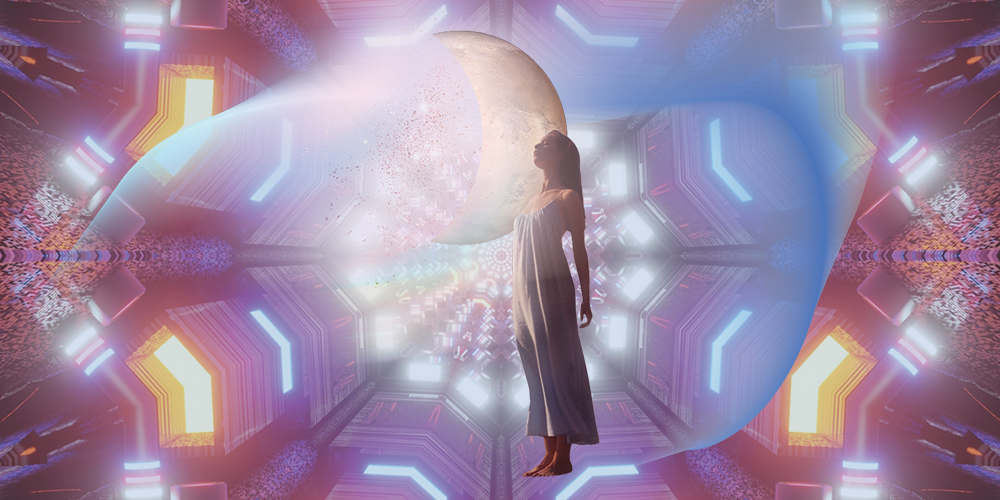
I invite you to picture a kaleidoscope. Every little piece of colored glass inside it is a piece of who you are — where you grew up, your culture, your spirituality, your family history, your nervous system, your personality, every relationship and experience you've ever had. Now picture loss reaching in and giving that kaleidoscope a hard, sudden turn. Everything shifts. Nothing looks quite the way it did a second ago.
That image is at the center of how I think about grief, because grief is not one unified reaction happening in one place. It moves through several interconnected parts of you, each of which experiences and processes loss in its own way, on its own timeline, often with zero coordination between them. Let me walk you through it.
Your body carries grief physically — headaches, digestive upset, a tightness in the chest, exhaustion that a full night's sleep doesn't touch. In acute cases, it can even show up as broken heart syndrome, a real, documented stunning of the heart muscle. The body can also dissociate under the weight of loss, disconnecting from full presence as a way of protecting you from more than you can hold at once.
Your brain is undergoing real, measurable change — rewiring stress and memory systems as it works to relearn a world that no longer includes someone it expected to keep finding there. This is what I mean when I say grief functions like a learning process, not a feeling that simply passes through you.
Your mind tries to think its way through loss. It replays memories, second-guesses decisions, hunts for explanations, tries to solve grief like it's a problem with a discoverable answer. It rarely is one, and trying to force it usually creates more suffering, not less.
Your emotions show up in a wide, sometimes contradictory range — sadness, anger, relief, guilt, even dark humor, occasionally all in the same hour, and occasionally not at all, when numbness takes over as protection from more than you can process.
Your spirit may wrestle with meaninglessness, or anger at whatever you call the divine, or a spiritual disconnect. Sometimes it's a feeling of failure, as if you should be "beyond" this kind of pain because of your spiritual practice. You're not failing. Grief is a sacred experience, not a spiritual shortcoming.
Your nervous system reacts to the loss of safety that major loss brings, often shifting into hyperarousal — restlessness, anxiety spikes, sensory overwhelm — or hypoarousal — shutdown, numbness, disconnection — as it tries to regulate an experience that has destabilized its whole sense of safety.
And your soul is what tries to hold all of this together, reaching for connection and wholeness even while your mind, body, emotions, and nervous system are each doing their own uncoordinated thing.
Here's why this matters so much to me: a holistic approach doesn't try to force all these parts of you into alignment on one neat timeline, and it doesn't just address one of them — usually the mind, which is where most conventional "talk it through" approaches live. It works with all of them, using different tools suited to each one: body-based regulation, nervous system co-regulation, cognitive reframing, emotional expression, spiritual and meaning-based work, soul-level practices. Because if you're only supported mentally while your body and nervous system stay completely dysregulated, you're still going to struggle, no matter how much insight you gain.
Grief doesn't move through you in one single wave or in a straight line through stages. It moves through your body, your brain, your mind, your emotions, your spirit, and your nervous system, separately and simultaneously. That's exactly why support that only addresses one part of you so often falls short of what you actually need.
- O'Connor, M-F. (2022). The Grieving Brain: The Surprising Science of How We Learn From Love and Loss. HarperOne.
- van der Kolk, B. (2014). The Body Keeps the Score: Brain, Mind, and Body in the Healing of Trauma. Viking.
- Porges, S. W. (2011). The Polyvagal Theory: Neurophysiological Foundations of Emotions, Attachment, Communication, and Self-Regulation. Norton.
Pamela Ann Noxon is a Holistic Grief Coach and Educator, and the founder of Mourning Goods, who is revolutionizing the way we support people in grief.
Her powerful work is rooted in helping grievers to find a way home to their innate wholeness after loss - even if they weren’t quite sure where home was before.
Drawing from ancient and modern healing arts, and everything from ritual to art therapy, movement, and active imagination work, she shares her powerful, heart-centered wisdom and experiences in conscious, trauma-informed, holistic grief support with other empathic, grown-ass women who have been through hell and back and who are called to help others.
She lives quite happily in the woods of Elfin Forest, Southern California co-creating a peaceful, deeply connected, semi-feral life with cats, dogs, horses, trees, hawks, and hummingbirds.
Those looking to help others can find her life changing work on helping others through her books, podcasts, and online workshops and certification courses. Grievers can find support through her workshops, books, and support mailclubs for grievers.